Friday, October 23, 2020

Sesshu Toyo Winter Landscape


Sesshu Toyo Winter Landscape, c. 1470

Sesshu Toyu, Winter Lanscape detail, c 1470


Sesshu Toyo was a Japanese Zen monk who is generally regarded as Japan's greatest painter. Heavily influenced by the Song and Yuan dynastic art, Sesshu Toyo uses their same techniques of austerity and simplicity to create his landscapes. (1) Curiously, many of the zen artists were not only inspired by artists of the southern Song Dynasty, but they were also painting landscapes of China despite having never been there. Sesshu Toyo, on the other hand, traveled to China in 1467 where he visited many buddhist monasteries, but upon returning to a war torn Japan he traveled the countryside making his own sketches of the landscape. (2)

Sesshu Toyo mastered the art of sumi-e painting or Chinese ink painting. These paintings are done quickly and economically with expressive brushstrokes. In the images above, Sesshu Toyo uses high contrast in his grey tones to achieve his purpose. He not only utilizes the blank canvas to highlight the snow, but he also takes advantage of using heavy black lines to create a sense of drama. His sharp choppy lines are significant in that they are not what you would expect from a landscape. These lines create the expressive energy within the painting. You feel the iciness through his use of harsh jagged brushstrokes slashing through the canvas in opposition to each other. This is not a pleasant winter wonderland but a harsh and frozen composition of the elements. Finally, there is a vertical slash that runs asymmetrically through the painting guiding our eyes through the turmoil. (3) 

Sesshu Toyo used the ideology of his religion in the creation of his paintings. As we have seen from other Asian artists there is a strong connection with the natural world. The contemplation of nature and how we interpret or express it is something that these monks spent a lot of time pondering. They were encouraged to wander the countryside for this very reason. Sesshu Toyo was an expert at communicating the deeper experience of nature. (3) 

What makes an artwork masterful? This is a question that is very open ended and objective, but I do believe that one of the criteria would be that it makes you feel something. In my opinion, this piece meets that criteria tenfold. When I look at this painting I feel more than just the cold. Something about this piece makes me feel the crushing weight of infinity alongside my own insignificance. Sesshu Toyo's sumi-e paintings are a treasure.


    Notes

    1. Dr. Sonia Coman, "A brief history of the arts of Japan: the Kamakura to Azuchi-Momoyama periods, Smarthistory, December 2, 2019, accessed October 22, 2020, https://smarthistory.org/japan-kamakura-azuchi-momoyama/

    2. Zen Mesterek Zen Masters, Terebess, accessed October 22, 2020https://terebess.hu/zen/mesterek/Sesshu.html.

    3. Dr. Asa Simon Mittman, "Nature:spotlight -- Sesshu Toyo's Winter Landscape," Smarthistory, August 3, 2019, accessed October 23, 2020, https://smarthistory.org/theme-nature/.


Wednesday, October 21, 2020

Daoism and Chinese Art

Scholar viewing a waterfall, Ma Yuan (Chinese, active ca. 1190–1225), Album leaf; ink and color on silk, China


Scholar Viewing a Waterfall by Ma Yuan (active ca. 1190-1225)

Daoism is one of three major philosophies that has had a lasting impact on Chinese art and culture. The other two, Buddhism and Confucianism, are no less significant, and used similar methods of minimalism and austerity for expression. Chinese art was mostly meant to convey the message that the artist was of good character and relied on a mastery of brush strokes and simple tricks to express the artist's inner soul. (1)

Daoism's central dogma can be described as a universal order of two opposing forces. These forces are in a constant state of flux that keep the universe in balance. Daoism stresses the importance of living harmoniously with nature. The spontaneity of nature is divine and man's will should not be in opposition to it. Daoism began around 500 B.C.E. (2) By the time of the Song Dynasty, Daoism had not only grown, but it had converged into what is known as Neo-Confucianism, a combination of Daoism, Confucianism and Buddhism. (3) 

The image above is a Southern Song painting of a man, presumably a scholar, gazing down at a bubbling stream. Painted on a square album leaf, the composition is compressed into the bottom left corner. The empty corner is an allusion to the infinite beyond our reach. The brushstrokes are deliberate and expressive anchoring us to the reality of our finite world. (4) The illusion of depth is achieved through the harmonious use of light and dark washes as well as a mist-like background. There is a tranquility to the subject matter that is achieved through minimal detail. 

This painting is a great example of Daoism philosophy penetrating the arts. The expressive brushstrokes  convey a feeling of untamed energy surging through the canvas. The waterfall is alive and spewing from the mountain while a pine tree, against all odds, grows crooked and strong out of the hillside. Meanwhile, the serene man and woman observe silently. There is a sense of material detachment to this painting that is almost poetic. You can feel the balance of forces at work through the juxtaposition of the elements.


     Notes

    1. Cartwright, Mark, Ancient Chinese Art, Ancient EU, accessed October 21, 2020, https://www.ancient.eu/Chinese_Art/.
    2.   Philosophy of Taoism, Highbrow, accessed October 21, 2020, https://gohighbrow.com/philosophy-of-taoism/.
    3.  The Song Dynasty, Boundless Art History, accessed October 21, 2020, https://courses.lumenlearning.com/boundless-arthistory/chapter/the-song-dynasty/.   
    4.  Kim, Hae Yeun, East Asian Cultural Exchange in Tiger and Dragon Paintings, The Met 150, accessed October 21, 2020, https://www.metmuseum.org/toah/hd/tidra/hd_tidra.htm.
   

Friday, October 9, 2020

Buddhapada

"Buddhapada" stone, 1st/2nd c C.E, Gandhara


The earliest representations of the Buddha were aniconic so his presence was often told by images of a parasol, the wheel, the tree of life, or footprints.(1) The Buddha could not be physically shown because he had passed into Nirvana therefore symbols like footprints would have represented his spiritual force. This symbolic vocabulary would have been universally understood by Buddhists.  The image above, found in Gandhara, are unique in that they were impressions rather than raised prints, and would have signified that the Buddha had actually, at one time, been there. Whereas a raised footprint, like the ones found in Amaravati, would have been a focus of devotion rather than a proclamation of the actual presence of the Buddha. (2)

Gandhara was a trade region that attracted a diverse group of people. It is believed that the movement of merchants and displaced tribes helped define a new set of cultural standards. It's possible that the imprints were a way for the Gandharan people to justify their particular interpretation of Buddhist philosophy. Who would argue if the Buddha had actually ministered to the people?(2)

Contained within a stylistically Gandhara crossed border are footprints of the Buddha covered in symbols. The lotus at the center of the feet are traditionally known as Dharmachakras, or wheels, but these are a Gandhara invention that have incorporated the lotus into the design. A Dharmachakra is the wheel of karma and is a shared symbol between the Hindu, Jain, and Buddhist traditions. The lotus symbolizes the Buddha's purity of spirit and also forms the focal point of the piece. The Triratna symbol on the heels incorporates the lotus into the design as well. The Triratna is a symbol of the Threefold Way which represents the Three Jewels of Buddhism (the Buddha, the Dharma, and the Sangha or the enlightened one, the teachings, and the monastic order). On the toes are repeated Svastika symbols that were auspicious symbols commonly found in Buddhist and Jain art during this period. There are two Yakshis on either side of the prints both holding palm leaves. Females played a secondary role in the early Northern Buddhist tradition and their appearance is odd. The hand gestures being shown tell us that they are signifying respect and greeting once again, alerting us to the physical presence of the Buddha.(2)


    Notes

    1. "Buddha Footprint," Wikipedia, accessed October 9, 2020, https://en.wikipedia.org/wiki/Buddha_footprint

    2.  John Eskenazi, "A 'Buddhapada' Stone , 1st/2nd c C.E, Gandhara," Columbia.edu, accessed October 9, 2020, http://www.columbia.edu/itc/mealac/pritchett/00routesdata/0100_0199/kushanart/buddhapada/buddhapada.html.


Wednesday, October 7, 2020

The Ajanta Caves


Ajanta Cave 26


Bodhisattva Padmapani (detail), Cave 1


Dated from the 2nd century B.C.E. to 650 C.E. the Ajanta Caves are an extraordinary example of Indian rock cut architecture. The structure was cut into the face of a mountain to form a Buddhist temple with 30 total caves dedicated to the life of the Buddha. Not only is the architecture mind blowing, but the paintings, or more appropriately tempera, found inside were considered to be some of the finest examples of ancient art in the world. Unfortunately, graffiti and poor maintenance has severely damaged the paintings, but we still have a few surviving to revel over.(1)

The top photo is of Cave 26. It is an amazingly symmetrical hall built on a horseshoe shaped cliff along the Waghora river. This part of the Ajanta Caves was a later addition built in the 5th century C.E. The piece at the end of the hall holds the stupa with a sculpture of the Buddha at the base. (2) Stupas were dirt burial mounds faced with stone and built to house part of the Buddha's or Bodhisattva's ashes.(3) Directly overhead are rib-like sculptures that overwhelm the viewer. The left and right sides are lined with perfectly symmetrical pillars covered in stone carvings of Buddhist themes. Most interesting is that these caves were created with simple tools of chisel, and hammer. The method used in Ajanta was reverse mapping where the chiseling process takes place from top to bottom.(4)

The bottom photo is a detail of Bodhisattva Padmapani located in Cave 1. The paintings found in Cave 1 were also of the second phase of Ajanta construction. This painting shows the Bodhisattva on the threshold of enlightenment. He is in a peaceful posture holding a lotus (his name translates to one holding the Padma or lotus flower) with half closed eyes looking down with compassion. He is richly painted in ochres and reds with some traces of blue. He is adorned in jewels and wears a lavish crown. It's a sensuous painting that is both material and divine. It's sort of a paradox.(5)

Even though we have lost quite a few of the frescoes to bad practice and vandalism we can learn a lot from these ancient artifacts. Somehow a community of people found a way to bring hope and light into a deep dark cave with nothing more than hammer, chisel, faith, and imagination. They created beauty within the mountain.  


    Notes
    1. "The Caves of Ajanta," Khan Academy, accessed October 7, 2020, https://www.khanacademy.org/humanities/art-asia/south-asia/x97ec695a:gupta-period/a/the-caves-of-ajanta.
    2. "Interior of Cave No 26, (Ajanta)," British Library, accessed October 7, 2020, http://www.bl.uk/onlinegallery/onlineex/apac/photocoll/i/019pho000430s34u00007000.html.
    3. "What is A Stupa," Lion's Roar, accessed October 7, 2020, https://www.lionsroar.com/what-is-a-stupa/.
    4. "Ajanta Caves: A perspective on Construction Methods and Techniques," IJRET: International Journal of Research in Engineering and Technology, accessed October 7, 2020, https://ijret.org/volumes/2016v05/i09/IJRET20160509035.pdf.
    5. "The Ajanta Cave Murals: 'Nothing Less than the Birth of Indian Art,'" The Guardian, accessed October 7, 2020, https://www.theguardian.com/artanddesign/2014/aug/15/mural-ajanta-caves-india-birth-indian-art.

Friday, October 2, 2020

Homunculus


Medieval Art covered a historic period that spanned the fall of the Roman Empire in 300 AD to the beginning of the Renaissance in 1400 AD. It was such a vast timeframe that it's difficult to describe or pin down exactly what makes it Medieval. We have broken it up into periods, but one common theme is Christianity. With the Catholic Church in power we have a number of religious artworks being commissioned. It was likely that art was created as a means of education.  Stylistically medieval art deviated greatly from the classical period where the artists took a step back from realism and entered into a new age of symbolism. The artists were trying to communicate stories to the viewer through simple renderings. What is important is not the merit of the painting but the message. (1)

There were a great deal of Madonna and child paintings that came out of the Middle Ages. The painting above is a 13th Century tempera and gold on wood icon of the Madonna and child by Italian painter Berlinghiero Berlinghieri. The figures in this painting have that distinct lack of depth common during the time. The hands in particular stand out as the fingers are proportionately off with a stylized pattern on their back side. The faces show little emotion and the eyes are dead. Most curiously, Baby Jesus looks like a tiny man. (2)

We know that the purpose of the arts was to teach the gospels to the populous.  Most people could neither read nor afford books, and let's not forget that they were living in a time when painting icons was a tricky occupation. There may have even been a common belief that God would punish someone for getting something theologically incorrect. So, what about Baby Jesus? Why was he always painted looking like a small man? Well, the artist was trying to convey the nature of Christ to the viewer. You see, the symbolism doesn't have to be subtle. The tiny baby looking like a man is obviously trying to point out that Jesus was God incarnate who is immutable and unchanging. Medieval artist may not have been the greatest of painters by merit, but they definitely had a talent for telling stories through the brush. (2)

    Notes
    1.  "Medieval Art," Wikipedia, accessed October 2, 2020, https://en.wikipedia.org/wiki/Medieval_art
    2.  "Why Are Babies in Medieval Paintings So Creepy?," Tales of Times Forgotten, accessed October 2, 2020, https://talesoftimesforgotten.com/2019/10/27/why-are-babies-in-medieval-paintings-so-creepy/.

Wednesday, September 30, 2020

Hieronymus Bosch

Medieval art focused on adornment and symbolism rather than perfection and realism.  Lack of perspective as well as lack of proportions were common traits in this period.  Colors were vibrant and bold and often there was a depiction of violence. The figures were flat and stiff with no emotion. It may have been hard for artists to find a voice when the Catholic Church was the controlling power, and a great deal of the production was for the purpose of teaching religion to the illiterate. That is not to say that revolutionary art wasn't being produced.(1)


The painting above is believed to be one of Dutch painter Hieronymus Bosch circa 1575.  It is an allegorical panel densely populated with grotesque creatures and macabre scenes. This is something we haven't seen before.  Bosch was the first artist to depict realms outside of human comprehension and is considered the first modern surrealist. While the purpose of his paintings was to instill Christian principles upon the viewer he managed to veer away from literal truths in his iconography. The story being told here was Christ's descent into Limbo to rescue the righteous souls. It would take multiple views to absorb all that was happening. His use of a limited color palette created a very dramatic scene. The canvas, or wood panel, depicts flat naked people representing the tortured souls in limbo. Hell was a common scene in Hieronymus Bosch's paintings, and he typically conveyed a darker side to the human psyche in his art. (2)

Hieronymus Bosch not only used symbolism in his paintings, but he also used satire which made his work hard to interpret but unique. We do observe a common use of flat lifeless looking people being tortured, vibrant colors that convey a sense of doom, and surreal proportions that were indicative of the times. However, Bosch drew solely from his imagination when creating his bizarre landscapes and hellacious biblical scenes. The imagery and juxtaposition of the different scenes happening is complex and fluid. He was a revolutionary mad scientist that created some truly unforgettable imagery that is still being copied today. 

    Notes 

    1. "Introduction to Classical, Medieval, and Renaissance Art," accessed September 30, 2020, https://www.murrieta.k12.ca.us/cms/lib5/CA01000508/Centricity/Domain/1517/Art%20Comparison%20Example.pdf.

    2. "Hieronymus Bosch," The Art Story, accessed September 30, 2020, https://www.theartstory.org/artist/bosch-hieronymus/


Friday, September 25, 2020

Transcending Time and Place

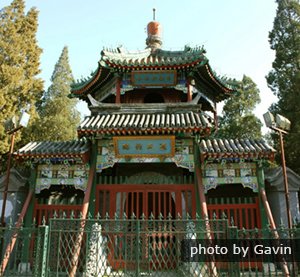
The mihrab of the Niujie Mosque, Beijing, China (北京牛街礼拜寺的米哈拉布)

Beijing Niujie MosqueBeijing Niujie Mosque

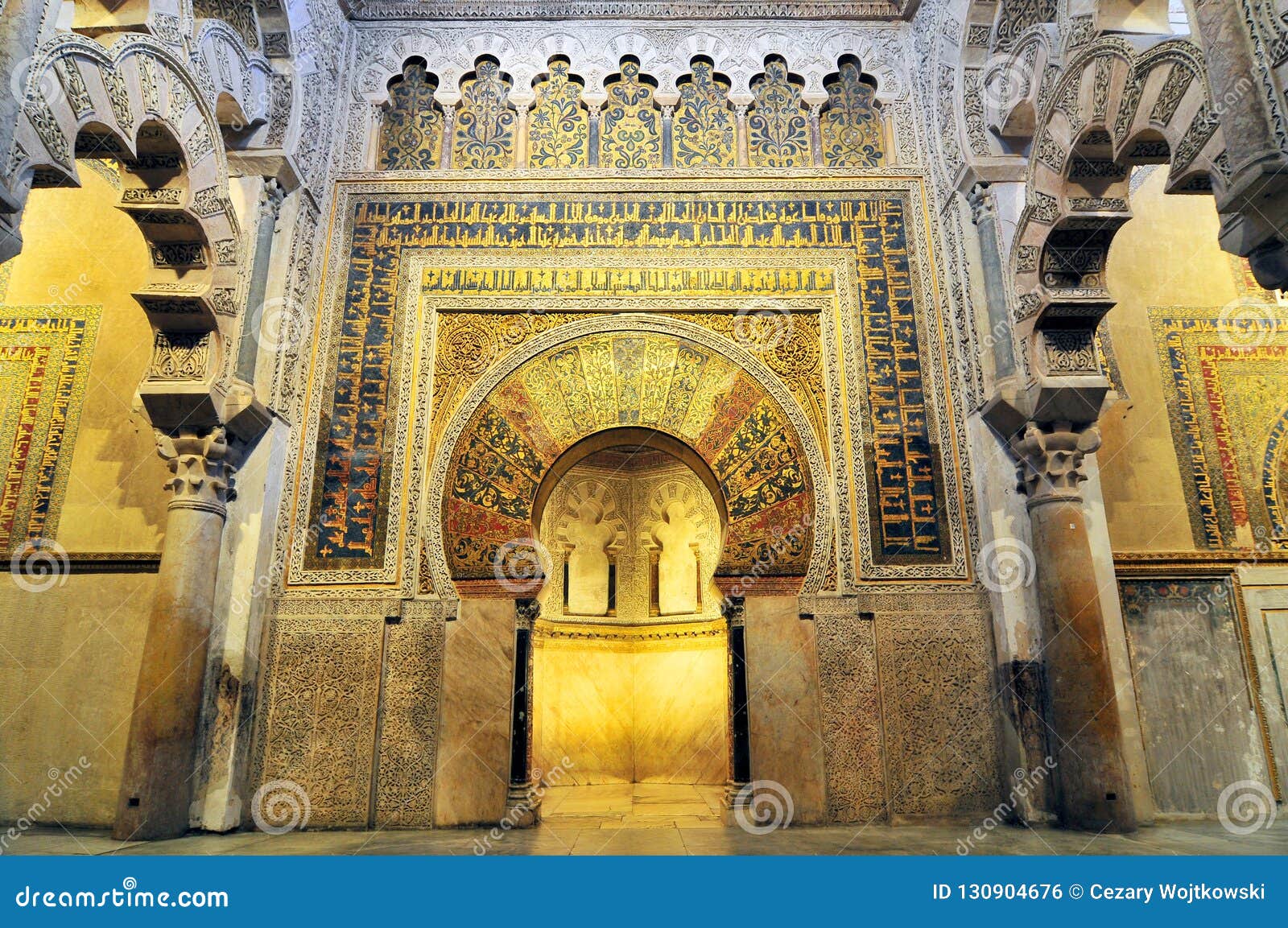
Andalucia The Moorish Mihrab of the Cordoba Mosque Mihrab Prayer Niche, La Mezquita de Cordoba, Spain.


Islamic art spans around 1400 years, covers a diverse geographic population, and is influenced by many sources. It is important to note that it is not always religious in nature.  Because of these factors scholars are often torn about the use of the phrase Islamic Art. Common characteristics include repetitive patterns, lack of figures, stylized forms based on geometry, and a decorative use of calligraphy. It has the ability to transcend time and space. These cohesive aesthetics are what define the art as Islamic, but we should be careful to recognize that individual cultures have shaped the art in the region in which it exists. (1)

The above images are of two mosques located in vastly different geographical regions. You can see the similarities in the use of geometry and repetition, or arabesque. Arches draw the viewer in and there is a pervasive quality that is hard to ignore. They both use calligraphic citation from the Koran in the decoration and there is a lack of figurative presence. However similar these mosques seem at first, there are distinct differences between the two that can be attributed to their locations. 

The top two photos are of the Niujie Mosque in Beijing China. It is the oldest mosque in Beijing and the most famous. The external architectural forms are a blend of Islamic and Chinese influence.  The structure reflects Chinese architecture in the repeated use of rectilinear forms rather than domes, and there is a distinct regional use of color and ornamentation on both the interior and exterior. It almost looks like a pagoda rather than a mosque and the use of dragons on the ornamentation gives it a distinctly Chinese vibe. (2)

Next, we fly across the globe to Spain and take a look at the Cordoba Mosque located in La Mezquita de Cordoba. This time we have a mosque with a very distinct byzantine influence. This structure has a rich and diverse history where it began as a temple, was transformed into a Church, then converted into a mosque, before being rebuilt by the Umayyads.(3)The architects made use of a number of Roman columns when rebuilding the mosque. The building is made from pieces of the Roman temple that was once occupying its place. The mihrab is an opulent masterpiece heavily influenced by Roman antiquity.

Islamic Art is not limited to a time, place, or culture. It isn't restricted to religion or architecture. We have compared two different mosques from across the globe and found that while they are different they have unifying features. They were each fashioned according to the popular architectural designs of the region, but within we found the tessellating tiles and sacred geometry that defines Islamic Art. It is truly a transcendental experience.


    Notes
    1.  "Introduction to Islamic Art," Lumen Boundless Art History, accessed September 25, 2020, https://courses.lumenlearning.com/boundless-arthistory/chapter/introduction-to-islamic-art/.
    2.  "The Niujie Mosque," China Highlights, accessed September 25, 2020, https://www.chinahighlights.com/beijing/attraction/the-niujie-mosque.htm.
    3.  "The Great Mosque of Cordoba," Khan Academy, accessed September 25, 2020, https://www.khanacademy.org/humanities/ap-art-history/early-europe-and-colonial-americas/ap-art-islamic-world-medieval/a/the-great-mosque-of-cordoba
 

Pollock's Passion

Artist Jackson Pollock dribbling sand on painting while working in his studio - Photo by Martha Holmes image source                         ...